
In Situ Microscopy Infrastructure for Materials Science & Nanotechnology
Materials performance is shaped by changes in temperature, electrical conditions, chemical environment, pressure, strain, and time. In situ and operando microscopy reveal how structure and chemistry evolve while those changes occur.
Hummingbird Scientific develops specimen environments and connected microscopy infrastructure for TEM, STEM, SEM, and X-ray workflows, helping researchers relate controlled experimental conditions to structural, chemical, and functional change.

Why in situ and operando microscopy matter to materials research
TEM and STEM reveal nanoscale structure, defects, interfaces, chemistry, diffraction, strain, and electronic behavior. SEM provides broader-area morphology, surface information, navigation, EBSD and TKD, and accessible in situ testing. X-ray microscopy adds penetration, three-dimensional imaging, elemental contrast, and correlative measurements across larger sample volumes.
The strongest materials workflows combine these methods with controlled specimen environments. Catalysts can be studied under gas and temperature, battery interfaces under liquid and electrical bias, quantum materials under cryogenic and electrical conditions, and nanoparticles during synthesis. The objective is to connect what a material experiences with how its structure changes and why its properties evolve.
Hummingbird supports that connection through specimen environments, positioning technologies, microfabricated devices, controls, and integration with the wider microscope and laboratory workflow.
Infrastructure for advanced materials microscopy
Advanced materials microscopy requires more than imaging resolution. Researchers also need controlled environments, repeatable positioning, engineered sample interfaces, and experiment records that preserve the conditions surrounding each measurement.
A broad portfolio of specimen environments
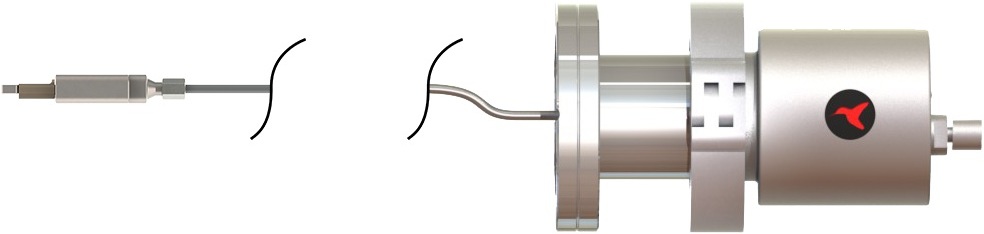
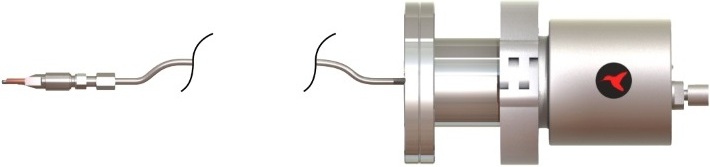
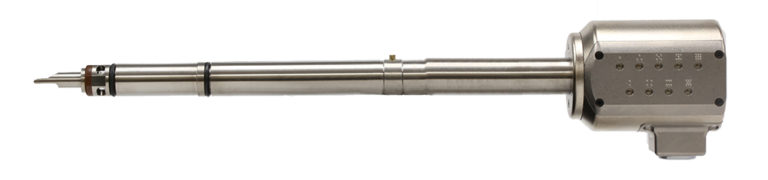
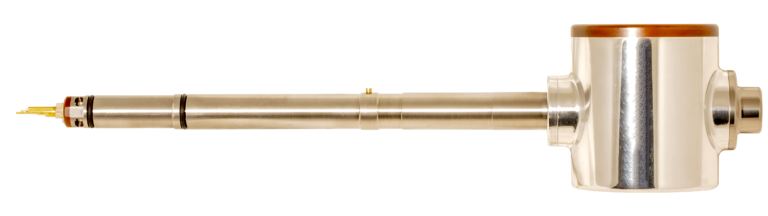
Hummingbird supports heating, electrical biasing, cryogenic biasing and heating, liquid flow, bulk and optical liquid electrochemistry, gas heating, high-pressure gas, gas plasma, optical gas heating, magnetizing, air-free transfer, nanomanipulation, and tomography.
The portfolio includes microfabricated devices, flexible carriers, environmental cells, bulk-sample approaches, and custom interfaces. This breadth allows researchers to select a specimen environment that fits the material, geometry, stimulus, and measurement rather than adapting every experiment to a single standardized format.
Precision positioning, tomography, and 4D-STEM
Hummingbird’s Precision TEM Stage is being developed to support deterministic positioning, closed-loop control, repeatable motion, tomography, 4D-STEM, diffraction, automated mapping, and future microscope automation.
For heterogeneous samples, sparse events, multi-site studies, and three-dimensional transformations, the ability to revisit selected regions and reproduce stage trajectories can make measurements more consistent and traceable. Preserving motion coordinates alongside environmental and microscope metadata also allows specimen position to become part of the experiment record.
Microfabrication as part of materials experimentation
Many in situ experiments depend on the chip or sample interface. Heater geometry influences thermal gradients. Electrode layout affects electrical measurements. Window thickness and spacing affect imaging and fluid behavior. Gas and liquid channels influence transport.
Hummingbird’s in-house microfabrication capability supports custom windows, spacers, electrodes, heaters, liquid cells, gas cells, magnetizing structures, X-ray devices, and research-specific sample interfaces.
Because our microfabrication is connected to our engineering, precision manufacturing, assembly, calibration, controls, and microscope testing, Hummingbird can develop and refine the complete experimental system rather than optimizing the chip in isolation.
Open experiment records for complex in situ data
In situ materials experiments generate images alongside temperature, voltage, current, pressure, gas or liquid conditions, flow, timing, holder state, microscope parameters, sample information, and external instrument data.
Hummingbird Connect™ supports defined and project-specific connections between Hummingbird systems and microscope-OEM or laboratory software environments. Colibri Platform™ provides an open approach to structured experiment records and data use across OEM software, Python workflows, open-source tools, institutional systems, LIMS, and future AI environments.
Researchers can continue using the acquisition, analysis, simulation, storage, and data-management tools that fit their work while Hummingbird connects the physical conditions and experimental context surrounding the measurement.
Why Hummingbird for materials science and nanotechnology
Hummingbird connects engineering, precision manufacturing, in-house microfabrication, electronics, controls, software integration, calibration, and internal TEM testing within one development process. This allows design decisions to be evaluated under real vacuum, beam, thermal, electrical, fluidic, and user-workflow conditions.
That connected infrastructure supports standard products, specialized configurations, custom chips, complete specimen environments, OEM platforms, and grant-supported instrument development for universities, national laboratories, materials companies, energy researchers, and microscope manufacturers.
Research areas supported:
Hummingbird systems support research across catalysis, batteries, electrochemistry, corrosion and dissolution, materials synthesis, thin films, nanoparticles, low-dimensional and quantum materials, electronic and photonic devices, energy conversion, structural materials, ceramics, polymers, and bio-inspired materials.
Selected Hummingbird products for materials science and nanotechnology







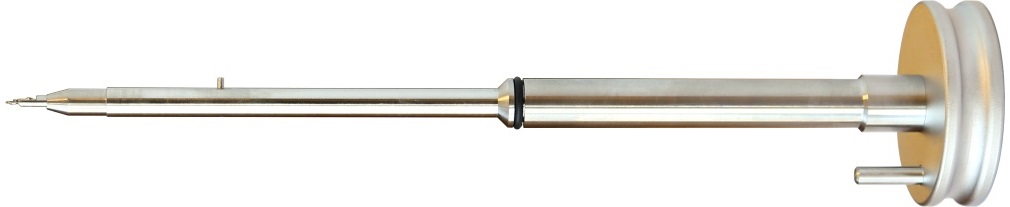
Build the environment your material needs
Design the environment your material needs. Talk with Hummingbird about gas, liquid, electrochemical, electrical, thermal, cryogenic, optical, magnetic, tomography, stage, chip, or custom in situ microscopy workflows.