.png)
Engineering transformations at the limits of microscopy, a challenge worth pursuing.
Electron and X-ray microscopy and spectroscopy specimen holders may look simple, but they are not!
Each holder is a multidisciplinary scientific instrument with unique challenges. First-principles analyses must inform mechatronics design, drafting, and manufacturing plans. Precision-machined components must be assembled into prototypes, inspected, and calibrated for reproducible data collection. Software control platforms and multi-scale electronics interfaces must be developed for actuators and signal acquisition.
Bridging the nanoscale to the macroscale
Why is microscopy hardware engineering challenging?
One of the most demanding operating environments in engineering
Specimen holders must function reliably in high-vacuum while maintaining exceptional mechanical stability, thermal and chemical compatibility, and electrical isolation. In-situ experiments bring a new set of challenges, requiring holder designs that control for all variables except for the isolated stimuli while maintaining precise alignment and minimizing artifacts from a damaging high-energy electron probe.
Engineering across multiple length scales
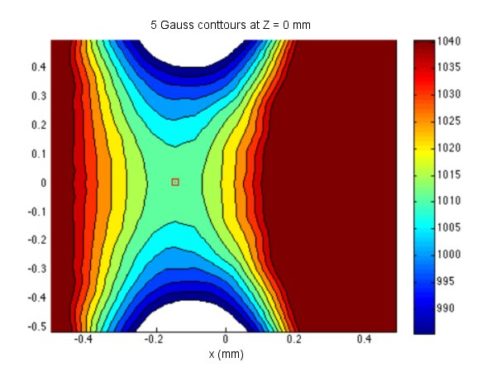
Nanoscale characterization and analysis experiments demand precision across orders of magnitude. Nanometer-scale positioning, temperature fluctuations, electrical signals, and fluid flows must be controlled and measured with extraordinary accuracy. At the nanoscale, seemingly insignificant mechanical tolerances can dramatically impede experiments. A micron-scale misalignment or burr will translate into substantial image shifts, loss of resolution, poor user experience, and reduced reproducibility.
Bridging the nanoscale to the macroscale
Why is microscopy hardware engineering challenging?
One of the most demanding operating environments in engineering
Specimen holders must function reliably in high-vacuum while maintaining exceptional mechanical stability, thermal and chemical compatibility, and electrical isolation. In-situ experiments bring a new set of challenges, requiring holder designs that control for all variables except for the isolated stimuli while maintaining precise alignment and minimizing artifacts from a damaging high-energy electron probe.
Engineering across multiple length scales
Nanoscale characterization and analysis experiments demand precision across orders of magnitude. Nanometer-scale positioning, temperature fluctuations, electrical signals, and fluid flows must be controlled and measured with extraordinary accuracy. At the nanoscale, seemingly insignificant mechanical tolerances can dramatically impede experiments. A micron-scale misalignment or burr will translate into substantial image shifts, loss of resolution, poor user experience, and reduced reproducibility.
Engineering approach and capabilities
How does a concept go from scientific question to commercial product?
First-principles engineering approach
Starting from a research question, we apply analytical and numerical approaches to product conceptualization. State-of-the-art 3D CAD design and finite element analysis (FEA) software are utilized to design hardware with novel experimental capabilities that integrate seamlessly with microscope and synchrotron installations at universities, national laboratories, and private laboratories around the world.
Experimental R&D-oriented design
We design holders to outlast and outperform their microscopes in terms of stability and resolution. A robust prototyping, iteration, and validation pipeline ensures production of tools that perform their intended research function reproducibly and repeatedly. Essential optimizations such as minimizing drift, runout, and backlash allow the final product itself to simplify workflows, eliminating the need for live correction software.
Concept

Analysis
Prototype
Validation
Production
Validation, calibration, and inspection
Why can you trust our data aquisition pipeline?
Close inspections of precision components
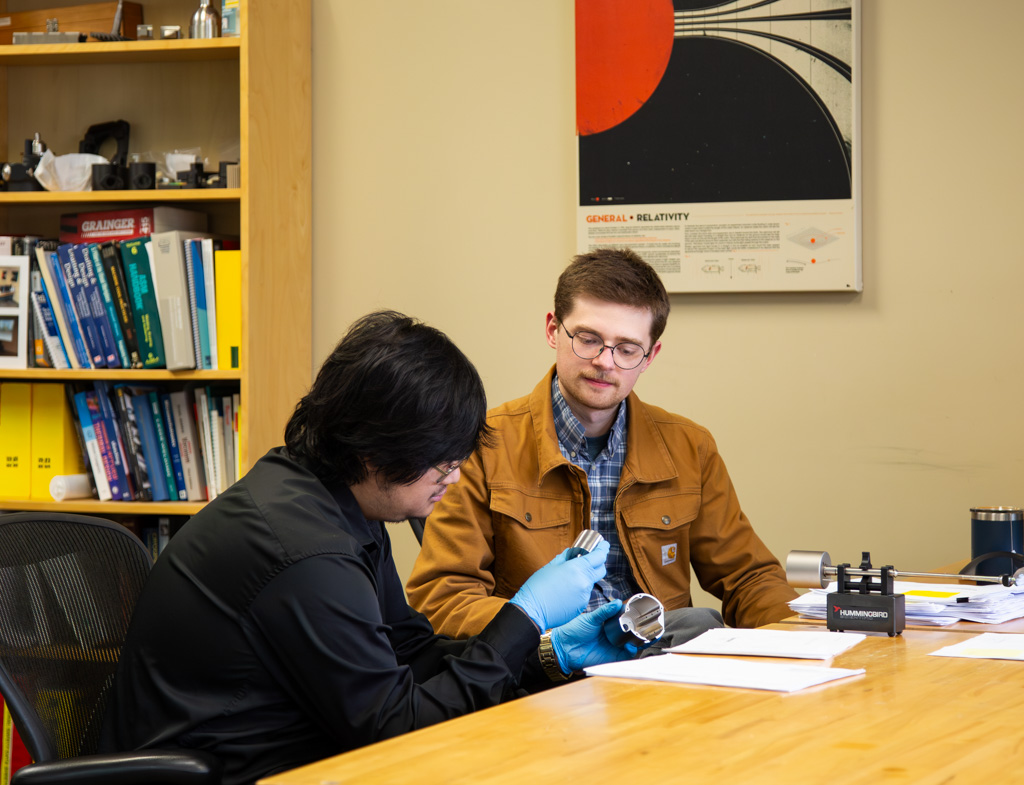
We have the advanced metrology instrumentation necessary to ensure a superior standard for compliance with microscale tolerances. Our rigorous inspection, review, and sign-off process tracks detailed bills-of-materials and testing sheets for every holder produced so we can nimbly support every custom job that comes through the shop.
Application-oriented testing and sensor calibration
Because we aim to support researchers, our holder functions are designed with specific research applications in mind. Application-specific testing is performed in the Hummingbird Nanoscience Laboratory to ensure every holder function translates to reproducible nanoscale environmental control and sample stimulation. On-chip thermometry is calibrated using IR cameras, allowing custom levels of precision within specified temperature ranges.


Software control platforms
How do we approach holder control software?
Integrated, intuitive, and accessible software packages
Software should be an accessible platform, not an island with a moat. Our standalone software modules control holder functionality, simplifying workflows and improving user experience, all without subscriptions or limits on license duration or number of installations. Ask us about custom control software modules and routines.
Flexible and interoperable software platforms
Our software is modulary compatibile with OEM software ecosystems, allowing for seamless platform integration and data management pipelines. We view growing support for open Python APIs amongst OEMs and specialized tool manufacturers as a positive trend that will bolster efforts to implement synchronization, automation, and AI-driven workflows.
Multiscale electronics design
Why is a holistic approach to electronics design essential?
Bespoke integration of multiscale electronics
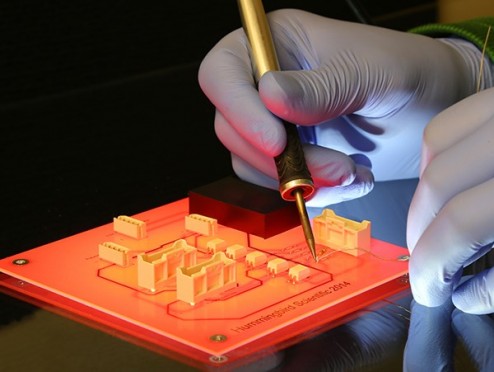
Because our applications require specialized sample environments and stimulus controls, an array of multiscale components must be inegrated, including connectors, multi-layer circuit boards, microfabricated chips, cabling, and software. Our expertise with these bespoke electronic ensembles allows us to consider custom electronic holder configurational options.
In-house microfabrication
We are the only sample holder maker with dedicated division for substrate microfabrication. Our in-house developed and fabricated lab-on-a-chip microelectronic configurations can heat and bias samples concurrently, in a high-vacuum or environmental cell environment. This means we can design and fabricate custom chips with novel electrode geometries and materials. Contact us to learn more about custom substrates.