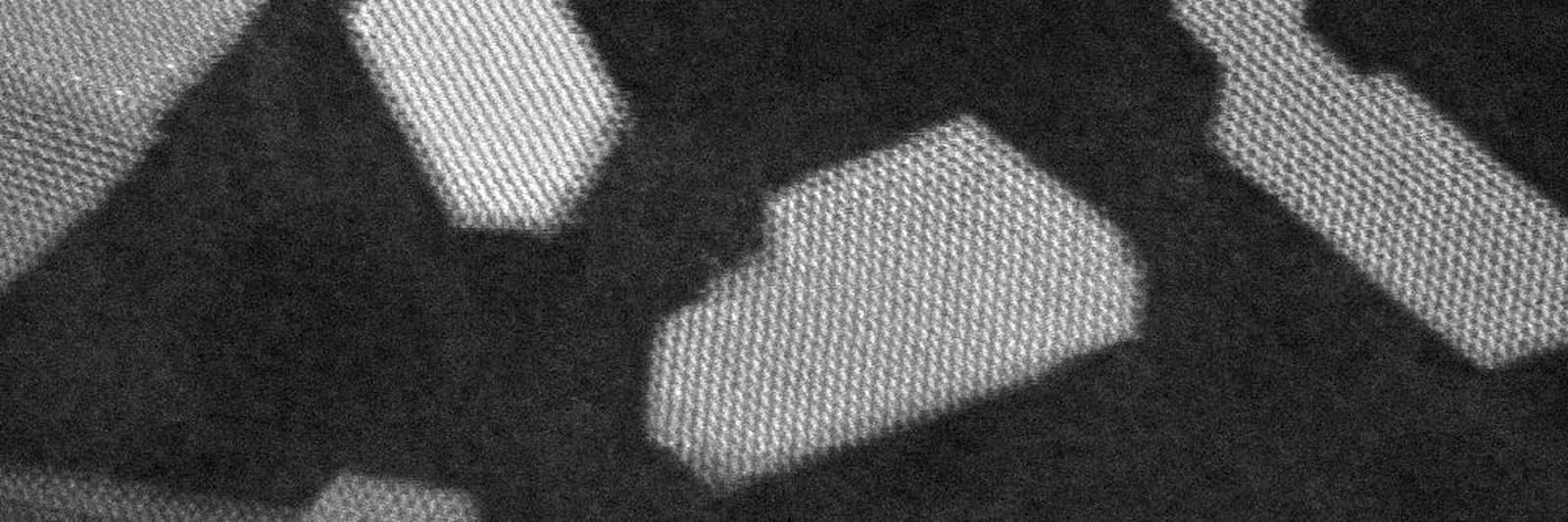
Curious how materials behave when dimensions shrink to the atomic limit?

Hummingbird Scientific in-situ sample holders enable real-time, atomic-resolution characterization of low-dimensional materials—directly linking nanoscale structure to function. Perform multi-modal TEM, SEM, and X-ray experiments across gas, liquid, and vacuum environments, with closed-loop temperature control from −170 °C to above 1000 °C to probe material behavior under realistic conditions. Every Hummingbird holder is developed for performance, reproducibility, and ease of use. Scroll down to explore the types of experiments with low dimensional materials made possible by these holders..

Why Hummingbird Scientific for

Low Dimensional Materials

research? 

Studying catalytic mechanisms requires understanding how materials behave during reactions, where structure, chemistry, and performance continuously evolve. These processes must be observed under realistic reaction environments, while conventional electron microscopy is often limited to pre- or post-reaction analysis, making it difficult to capture these dynamic processes.


In-situ and operando TEM enable direct observation under working conditions. Hummingbird Scientific extends this capability with stable imaging across gas, liquid, and electrochemical environments, and experiments at up to 2 bar and above 1000 °C, allowing catalysts to be studied under realistic conditions with high reproducibility.

Real-time catalyst behavior during reactions

Observe catalyst restructuring, degradation, and active-site evolution during reactions under operando conditions, overcoming the limitations of post-reaction analysis and enabling direct identification of activity and deactivation mechanisms.

Structure–performance relationships in real time

Correlate nanoscale structure with catalytic activity and selectivity during reactions, linking morphology, composition, and oxidation state directly to performance, which are otherwise difficult to resolve without real-time observation.

Realistic reaction conditions at high temperature and controlled pressures

Study catalysts under controlled gas and liquid environments at elevated temperatures with stable imaging performance, ensuring behavior can be observed under realistic conditions rather than approximated.

  • Temperatures above 1000 °C with minimal drift
  • Controlled gas and liquid environments
  • Stable imaging without drift correction

Catalyst restructuring and phase transformations

Capture dynamic structural and chemical changes during reactions, including restructuring, phase transformations, and active-site evolution, which are often not accessible through static or ex-situ analysis.

2D materials dynamics in liquids

Linking structure and function

Read More

2D material at high temperatures

In-situ heating >1000 ºC

Read More

2D materials-based electronic devices

Operando biasing and imaging

Read More

Low dimensional materials growth in gas environment

At temperatures >1000 ºC

Read More

Low dimensional materials growth in liquids

In-situ liquid phase imaging

Read More

Low dimensional materials decomposition in gas

Thermal cycling to >1000 ºC

Read More

Low dimensional materials decomposition in liquids

In-situ dissolution processes

Read More

Manipulation and Biasing of Low Dimensional Materials

Site-specific electrical connections

Read More

Low dimensional materials electrochemistry

Batteries, electrocatalysis, and more

Read More

Which type of experiment best matches your research?

The right experimental setup depends on the question you need to answer. Use the guide below to find published examples, experimental possibilities, and the holder solutions to support them.

2D materials dynamics in liquids

Linking structure and function

Read More

2D material at high temperatures

In-situ heating >1000 ºC

Read More

2D materials-based electronic devices

Operando biasing and imaging

Read More

Low dimensional materials growth in gas environment

At temperatures >1000 ºC

Read More

Low dimensional materials growth in liquids

In-situ liquid phase imaging

Read More

Low dimensional materials decomposition in gas

Thermal cycling to >1000 ºC

Read More

Low dimensional materials decomposition in liquids

In-situ dissolution processes

Read More

Manipulation and Biasing of Low Dimensional Materials

Site-specific electrical connections

Read More

Low dimensional materials electrochemistry

Batteries, electrocatalysis, and more

Read More

Low dimensional materials electrochemistry

Batteries, electrocatalysis, and more

Products and Research

Manipulation and Biasing of Low Dimensional Materials

Site-specific electrical connections

Products and Research

Low dimensional materials decomposition in liquids

In-situ dissolution processes

Products and Research

Low dimensional materials decomposition in gas

Thermal cycling to >1000 ºC

Products and Research

Low dimensional materials growth in liquids

In-situ liquid phase imaging

Products and Research

Low dimensional materials growth in gas environment

At temperatures >1000 ºC

Products and Research

2D materials-based electronic devices

Operando biasing and imaging

Products and Research

2D material at high temperatures

In-situ heating >1000 ºC

Products and Research

2D materials dynamics in liquids

Linking structure and function

Products and Research

Browse More Publications

See More Publications
Thank you! Your submission has been received!
Oops! Something went wrong while submitting the form.

Video Spotlight

2D materials phase transformation at high temperatures

Two-dimensional (2D) PtSe₂ offers tunable band gaps for near-infrared optoelectronics, with properties highly sensitive to layer thickness, phase, and defects—making precise characterization essential, as subtle structural variations directly impact electronic and optical performance. The Hummingbird Scientific MEMS heating + biasing sample holder enables real-time, in situ control of these properties by applying high temperatures and electrical bias inside the TEM, driving phase transformations while maintaining atomic-resolution imaging.

The video captures the real-time transformation of 2D PtSe₂ into Se-deficient PtSe₁-x during in situ heating to ~550 °C, with the phase transition initiating near 500 °C. Evolving contrast reveals directional phase propagation and dynamic interfaces, providing direct insight into transformation pathways. The growth kinetics—and resulting phase front velocity—are tunable via the applied stimulus, enabling precise nanoscale control over phase engineering.

Hummingbird Advantages

  • MEMS-based closed-loop sample heating beyond 1000 ºC.
  • Near drift-free in-situ atomic-resolution imaging throughout the temperature range.

Reference: Data provided by Pawan Kumar, Eric Stach and Deep Jariwala from the University of Pennsylvania

Compare Tool Capabilities

Choose a specimen holder based on your experimental and compatibilty needs
    TEM Nano-ManipulatorHeating- BiasingTEM TomographyBulk Liquid ElectrochemistryCryo Biasing TEM
Microscope/ TechniqueTEM version available
Microscope/ Technique
TEM Version Available
Excellent
Excellent
Excellent
Excellent
Excellent
 SEM version available
N/A
Excellent
N/A
Excellent
N/A
 X-Ray version available
N/A
Excellent
N/A
Excellent
N/A
Battery ConfigurationIndividual nanowire/nanoparticle
Excellent
Excellent
Excellent
Excellent
Excellent
 Thin film
Good
Excellent
Excellent
Good
Excellent
StimuliElectrical
Excellent
Excellent
N/A
Excellent
Excellent
 Thermal
N/A
Excellent
N/A
Excellent
Excellent
 Optical TEM version available
Good
N/A
N/A
Excellent
N/A
ImagingHigher resolution and diffraction
Excellent
Excellent
Excellent
Good
Excellent
 EDS/EELS compatibility
Excellent
Excellent
Excellent
Good
Excellent
 3D reconstruction
Good
Good
Excellent
N/A
N/A
 In-situ imaging
Excellent
Excellent
Excellent
Excellent
Excellent
 Pre-and post-mortem analysis
Good
Good
Excellent
Good
Good
 Transfer air-sensitive samples
Good
Good
Good
Excellent
N/A
Beam EffectsCompatibility with volatile electrolytes
N/A
N/A
N/A
Excellent
N/A
 Minimal beam damage
Good
Good
Good
Good
Good
Quantitative ElectrochemistryReplicate bulk measurements
Good
N/A
Excellent
Good
Good
 Image all battery components
Good
Excellent
N/A
Excellent
Excellent
 Longer cycling
Excellent
Excellent
N/A
Excellent
Excellent
TEM Nano-Manipulator
Excellent
N.A.
N.A.
Excellent
Good
Excellent
N.A.
Good
Excellent
Excellent
Good
Excellent
Good
Good
N.A.
Good
Good
Good
Excellent
TEM Tomography
Excellent
N.A.
N.A.
Excellent
Excellent
N.A.
N.A.
N.A.
Excellent
Excellent
Excellent
N.A.
Excellent
Good
N.A.
Good
N.A.
N.A.
N.A.
N.A.
N.A.
Excellent
Heating-Biasing
Excellent
Excellent
Excellent
Excellent
Excellent
Excellent
Excellent
N.A.
Excellent
Excellent
Good
Excellent
Good
Good
N.A.
Good
Excellent
Excellent
Excellent
N.A.
N.A.
Excellent
Gas-Heating
Excellent
Excellent
Excellent
Excellent
Excellent
Excellent
Excellent
Excellent
N.A.
Excellent
Good
N.A.
Excellent
Good
Bulk Liquid Electrochemistry features for Tool selector
Excellent
Excellent
Excellent
Excellent
Good
Excellent
Excellent
Excellent
Good
Good
N.A.
Excellent
Good
Excellent
Excellent
Good
Good
Excellent
Excellent
Excellent
N.A.
N.A.
Excellent
Good
N.A.
Product
Stimuli
Key Capability
Use Case
-
Heating
-
Electrical Biasing
>1000 °C, minimal drift
Gas Catalysis
-
Heating
>1000 °C, minimal drift
Gas Catalysis
-
Heating
-
Electrical Biasing
>1000 °C, minimal drift
Gas Catalysis
-
Electrical Biasing
-
Heating
>1000 °C, minimal drift
Gas Catalysis
-
Plasma
>1000 °C, minimal drift
Gas Catalysis
-
Heating
>1000 °C, minimal drift
Gas Catalysis
-
Electrical Biasing
>1000 °C, minimal drift
Gas Catalysis
-
Electrical Biasing
-
Optical Illumination
-
Heating
>1000 °C, minimal drift
Gas Catalysis
-
Cooling
-
Heating
-
Electrical Biasing
>1000 °C, minimal drift
Gas Catalysis
-
Optical Illumination
-
Heating
>1000 °C, minimal drift
Gas Catalysis
-
Electrical Biasing
>1000 °C, minimal drift
Gas Catalysis
-
Nano-Manipulation
-
Electrical Biasing
>1000 °C, minimal drift
Gas Catalysis
-
Tomography
>1000 °C, minimal drift
Gas Catalysis
-
Magnetizing
>1000 °C, minimal drift
Gas Catalysis
-
Air-Free Transfer
-
Electrical Biasing
-
Heating
>1000 °C, minimal drift
Gas Catalysis
Product
Stimuli
Key Capability
Use Case
-
Heating
-
Electrical Biasing
>1000 °C, minimal drift
Gas Catalysis
-
Heating
>1000 °C, minimal drift
Gas Catalysis
-
Heating
-
Electrical Biasing
>1000 °C, minimal drift
Gas Catalysis
-
Electrical Biasing
-
Heating
>1000 °C, minimal drift
Gas Catalysis
-
Heating
>1000 °C, minimal drift
Gas Catalysis
Product
Stimuli
Key Capability
Use Case
-
Heating
-
Electrical Biasing
>1000 °C, minimal drift
Gas Catalysis
-
Heating
-
Electrical Biasing
>1000 °C, minimal drift
Gas Catalysis
-
Heating
>1000 °C, minimal drift
Gas Catalysis
-
Electrical Biasing
-
Heating
>1000 °C, minimal drift
Gas Catalysis
-
Heating
>1000 °C, minimal drift
Gas Catalysis

Compare Tool Capabilities

Choose a specimen holder based on your experimental and compatibilty needs

TEM Product Guide for

Low Dimensional Materials

Experiments

Product
Stimuli
Key Capability
Use Case
-
Heating
-
Electrical Biasing
Continuous liquid flow
Reactions in flowing liquids
-
Heating
>1000 °C with stable imaging
Gas-phase reactions
-
Heating
-
Electrical Biasing
-
Electrical Biasing
-
Heating
In-liquid electrochemical control
Electrochemical reactions in liquids
-
Plasma
Plasma activation during imaging
Plasma-driven reactions
-
Heating
Up to 30 bar, high-temperature operation
High-pressure gas reactions
-
Electrical Biasing
-
Optical Illumination
-
Heating
Simultaneous Optical + electrochemical control
Photo-electrochemical reactions
-
Cooling
-
Heating
-
Electrical Biasing
-
Optical Illumination
-
Heating
Optical + thermal stimulation
Photo-activated gas reactions
-
Electrical Biasing
-
Nano-Manipulation
-
Electrical Biasing
-
Tomography
Pristine and post-mortem characterization
-
Magnetizing
-
Air-Free Transfer
-
Electrical Biasing
-
Heating
Exposure-free sample transfer
Air-sensitive materials

SEM Product Guide for

Low Dimensional Materials

Experiments

Product
Stimuli
Key Capability
Use Case
-
Heating
-
Electrical Biasing
>1000 °C, minimal drift
Gas Catalysis
-
Heating
>1000 °C, minimal drift
Gas Catalysis
-
Heating
-
Electrical Biasing
>1000 °C, minimal drift
Gas Catalysis
-
Electrical Biasing
-
Heating
>1000 °C, minimal drift
Gas Catalysis
-
Heating
>1000 °C, minimal drift
Gas Catalysis

X-ray Product Guide for

Low Dimensional Materials

Experiments

Product
Stimuli
Key Capability
Use Case
-
Heating
-
Electrical Biasing
>1000 °C, minimal drift
Gas Catalysis
-
Heating
-
Electrical Biasing
>1000 °C, minimal drift
Gas Catalysis
-
Heating
>1000 °C, minimal drift
Gas Catalysis
-
Electrical Biasing
-
Heating
>1000 °C, minimal drift
Gas Catalysis
-
Heating
>1000 °C, minimal drift
Gas Catalysis

Frequently Asked Questions

What is in-situ TEM in catalysis?
What is the difference between in-situ and operando TEM?
How do you study catalysts at high temperature in TEM?
Why is real-time observation important in catalysis?

Ready to discuss your experiment?

Our applications scientists can help identify the right products, experimental workflows, and published examples for your research.