.png)

Hummingbird Scientific in-situ sample holders enable real-time, atomic-resolution characterization of low-dimensional materials—directly linking nanoscale structure to function. Perform multi-modal TEM, SEM, and X-ray experiments across gas, liquid, and vacuum environments, with closed-loop temperature control from −170 °C to above 1000 °C to probe material behavior under realistic conditions. Every Hummingbird holder is developed for performance, reproducibility, and ease of use. Scroll down to explore the types of experiments with low dimensional materials made possible by these holders..

Studying catalytic mechanisms requires understanding how materials behave during reactions, where structure, chemistry, and performance continuously evolve. These processes must be observed under realistic reaction environments, while conventional electron microscopy is often limited to pre- or post-reaction analysis, making it difficult to capture these dynamic processes.
In-situ and operando TEM enable direct observation under working conditions. Hummingbird Scientific extends this capability with stable imaging across gas, liquid, and electrochemical environments, and experiments at up to 2 bar and above 1000 °C, allowing catalysts to be studied under realistic conditions with high reproducibility.
Observe catalyst restructuring, degradation, and active-site evolution during reactions under operando conditions, overcoming the limitations of post-reaction analysis and enabling direct identification of activity and deactivation mechanisms.
Correlate nanoscale structure with catalytic activity and selectivity during reactions, linking morphology, composition, and oxidation state directly to performance, which are otherwise difficult to resolve without real-time observation.
Study catalysts under controlled gas and liquid environments at elevated temperatures with stable imaging performance, ensuring behavior can be observed under realistic conditions rather than approximated.
Capture dynamic structural and chemical changes during reactions, including restructuring, phase transformations, and active-site evolution, which are often not accessible through static or ex-situ analysis.

2D materials dynamics in liquids
Linking structure and function

2D material at high temperatures
In-situ heating >1000 ºC

2D materials-based electronic devices
Operando biasing and imaging

Low dimensional materials growth in gas environment
At temperatures >1000 ºC

Low dimensional materials growth in liquids
In-situ liquid phase imaging

Low dimensional materials decomposition in gas
Thermal cycling to >1000 ºC

Low dimensional materials decomposition in liquids
In-situ dissolution processes

Manipulation and Biasing of Low Dimensional Materials
Site-specific electrical connections

Low dimensional materials electrochemistry
Batteries, electrocatalysis, and more


2D materials dynamics in liquids
Linking structure and function

2D material at high temperatures
In-situ heating >1000 ºC

2D materials-based electronic devices
Operando biasing and imaging

Low dimensional materials growth in gas environment
At temperatures >1000 ºC

Low dimensional materials growth in liquids
In-situ liquid phase imaging

Low dimensional materials decomposition in gas
Thermal cycling to >1000 ºC

Low dimensional materials decomposition in liquids
In-situ dissolution processes

Manipulation and Biasing of Low Dimensional Materials
Site-specific electrical connections

Low dimensional materials electrochemistry
Batteries, electrocatalysis, and more

Batteries, electrocatalysis, and more

Site-specific electrical connections

In-situ dissolution processes

Thermal cycling to >1000 ºC

In-situ liquid phase imaging

At temperatures >1000 ºC

Operando biasing and imaging

In-situ heating >1000 ºC

Linking structure and function


2D materials phase transformation at high temperatures
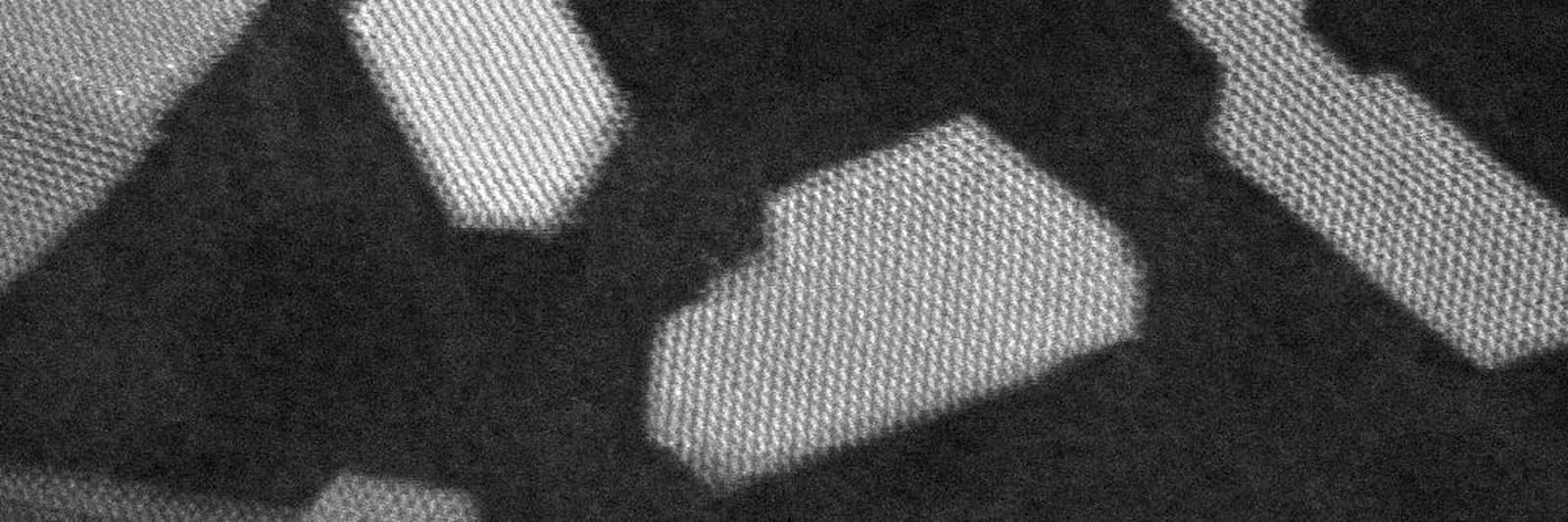
Two-dimensional (2D) PtSe₂ offers tunable band gaps for near-infrared optoelectronics, with properties highly sensitive to layer thickness, phase, and defects—making precise characterization essential, as subtle structural variations directly impact electronic and optical performance. The Hummingbird Scientific MEMS heating + biasing sample holder enables real-time, in situ control of these properties by applying high temperatures and electrical bias inside the TEM, driving phase transformations while maintaining atomic-resolution imaging.
The video captures the real-time transformation of 2D PtSe₂ into Se-deficient PtSe₁-x during in situ heating to ~550 °C, with the phase transition initiating near 500 °C. Evolving contrast reveals directional phase propagation and dynamic interfaces, providing direct insight into transformation pathways. The growth kinetics—and resulting phase front velocity—are tunable via the applied stimulus, enabling precise nanoscale control over phase engineering.
Hummingbird Advantages
Reference: Data provided by Pawan Kumar, Eric Stach and Deep Jariwala from the University of Pennsylvania


Our applications scientists can help identify the right products, experimental workflows, and published examples for your research.